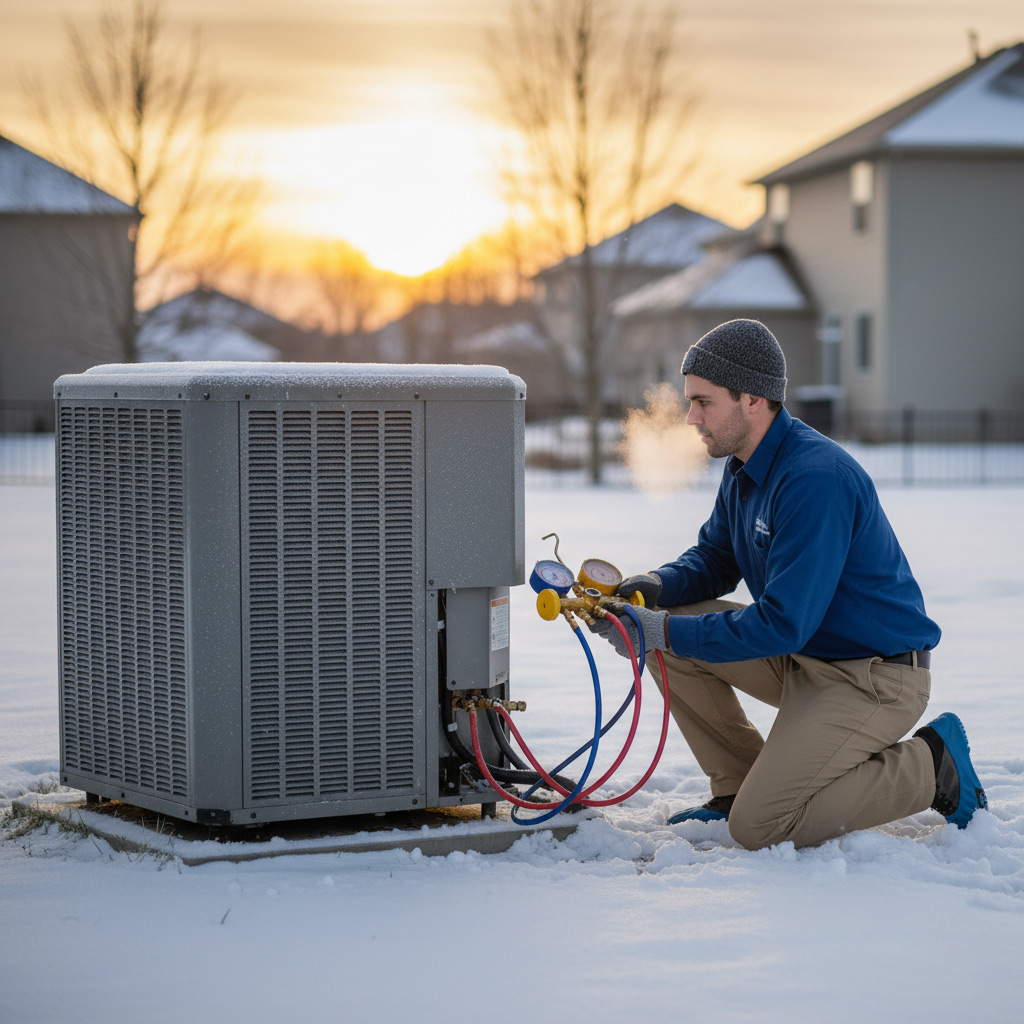
Imagine slashing your energy bill while your home stays cozy from the first frost to the last summer night.
In Winston‑Salem, engineers treat every house like a puzzle, matching the city’s swing‑season weather with smart airflow tricks and the latest tech.
They blend zoning strategies, high‑tech thermostats, and duct designs that keep conditioned air where it’s needed most, cutting waste before it even starts.
Ready to see the exact steps they take to build a system that saves you money and keeps comfort at the front door? Keep reading.
Understanding Winston‑Salem’s Climate and Its Impact on HVAC Design
Winston‑Salem lives in a climate that flips the switch from crisp, sub‑zero mornings to sweltering, humid afternoons in a single day. That swing‑season rhythm forces a heating system to work hard in winter and a cooling system to fight back in summer, often at the same time.
Seasonal Shifts That Matter
- Winter lows can dip into the mid‑20s °F.
- Spring and fall hover around the 60‑70 °F sweet spot.
- Summer peaks regularly hit the high 80s °F with humidity pushing the heat index above 95 °F.
Because the air mass changes so quickly, a designer can’t rely on a “one‑size‑fits‑all” approach. Every degree counts when you’re trying to keep the house comfortable without blowing the utility bill.
Why One‑Size‑Fits‑All Fails
Using a generic system size leads to two nasty outcomes: short‑cycling in the summer and constant “blowing” in the winter. Both waste energy and wear out components faster than they should.
Smart designers start with the climate data, then match equipment that can scale up for a hot, humid night and scale down for a mild spring evening. The result is a system that stays in its sweet spot, no matter what the weather throws at it.
Conducting Accurate Load Calculations: Manual J, Duct Sizing, and Energy Modeling
Before you ever think about picking a furnace or a heat pump, you need to know exactly how much heating and cooling your home actually demands. A mis‑sized system is a money‑sucking black hole that leaves you shivering in winter and sweating in summer.
Manual J – The Gold Standard
The Manual J calculation is the blueprint that tells you the precise BTU load for each room. It factors in square footage, window orientation, insulation levels, and even the number of occupants. Skip this step and you’ll pay for a system that’s either too big or too small.
Getting the Ducts Right
Even the best furnace can’t perform if the air can’t travel efficiently. Proper duct sizing keeps pressure balanced and prevents hot or cold spots.
- Measure total airflow needed (CFM) from the Manual J results.
- Apply the Equal Friction method to determine duct diameter.
- Check for sharp bends or long runs that could choke the flow.
Energy Modeling – Seeing the Future
Modern software lets technicians simulate a year’s worth of weather in Winston‑Salem, showing you where energy leaks will bite hardest. This step turns guesswork into a data‑driven plan.
- Input local climate data and the Manual J load.
- Run scenarios with different equipment efficiencies.
- Identify the sweet spot where comfort meets cost savings.
Zoning Strategies and Smart Thermostat Integration for Targeted Comfort
Why Zoning Beats One‑Size‑Fits‑All
In a Winston‑Salem home, the upstairs bedroom rarely feels the same as the finished basement. Dividing the house into zones lets each area get exactly the airflow it craves, no more, no less. Result? Lower bills and happier occupants.
Smart Thermostats: The Brain Behind the Zones
A Wi‑Fi thermostat talks to each zone’s dampers like a conductor to an orchestra. It learns when you’re home, when you’re away, and even adjusts for a sudden cold front. Remote control from your phone means you can crank down the heat before you step out of the car.
- Room‑by‑room temperature presets
- Geofencing that shuts off unused zones
- Energy‑use reports that show exactly where savings hide
When you pair a multi‑stage furnace with a smart thermostat, the system can run at low speed most of the time, only kicking up when a zone demands it. That tiny tweak can shave 10‑15% off your annual energy cost.
Selecting High‑Efficiency Equipment: SEER, AFUE, Variable‑Speed Motors, and Heat Pumps
SEER – the cooling score that matters
In Winston‑Salem, a high SEER rating translates to real dollars saved when the summer heat rolls in. Look for units rated 16 SEER or higher if you want the air conditioner to work hard only when it’s absolutely necessary.
Why it counts:
- Higher SEER = less electricity per BTU
- Better performance on humid days
- Longer lifespan for the compressor
AFUE – heating efficiency in plain English
The AFUE number tells you how much fuel actually becomes heat. A furnace with 95 % AFUE turns almost every dollar of gas into warmth, while a 80 % unit throws the rest out the vent.
Key takeaways:
- Higher AFUE = lower gas bills
- Modern condensing furnaces hit 98 % AFUE
- Check local rebates; many utilities reward high‑AFUE installs
Variable‑Speed Motors – the quiet workhorse
Unlike single‑speed blowers that slam on full blast, variable‑speed motors modulate airflow to match demand. The result? Consistent temperature, less noise, and a noticeable dip in energy use.
Benefits at a glance:
- Precise control keeps humidity in check
- Reduced wear on the system
- Improved indoor air quality thanks to steady circulation
Heat Pumps – the all‑season champion
Modern heat pumps in the Triad can heat, cool, and even dehumidify with a single outdoor unit. When the temperature dips below 30°F, a cold‑climate model still pulls heat efficiently.
What to watch for:
- Look for a HSPF (Heating Seasonal Performance Factor) of 9.0 or higher
- Pair with a high‑SEER air conditioner for dual‑season savings
- Consider a hybrid system if you have an older furnace that still works well

Optimizing Ductwork Design and Airflow Balancing to Eliminate Waste
When air has to fight a maze of undersized, leaky ducts, your furnace or heat pump works overtime – and your wallet feels the heat. Properly sized, sealed, and insulated ducts let the system move the exact amount of air it was built to handle, no more, no less. The result? Consistent temperatures, quieter operation, and a noticeable dip in utility bills.
Right‑size the runs
Engineers start with a Manual D calculation to match duct dimensions to the load each room demands. Too small, and you get high static pressure; too big, and the air spreads thin, wasting energy. The sweet spot delivers steady airflow without forcing the blower to work harder.
- Use rigid metal or insulated flex for main trunks – they hold shape and resist heat loss.
- Seal every joint with mastic or UL‑listed tape; a single leak can throw off the whole system.
- Insulate ducts that run through unconditioned spaces to keep the air temperature stable.
Balance the breath of the house
Even a perfect duct layout can fall short if the registers aren’t tweaked. Technicians employ dampers, flow hoods, and smoke pencils to fine‑tune each outlet. The goal is simple: every room gets the airflow it asked for, no room left starving or over‑fed.
- Adjust dampers gradually – a little change makes a big difference.
- Check static pressure at the blower and at the farthest register; they should be within the manufacturer’s range.
- Re‑measure after any major change; a new appliance or added insulation can shift the balance.
Case Study: Energy‑Saving HVAC Retrofit in a Historic Winston‑Salem Home
The Challenge
Built in 1912, the Victorian‑style house sat under layers of plaster, original woodwork, and a leaky attic. Old‑school ductwork choked the system, and the original furnace guzzled fuel even on mild days. Homeowners wanted modern comfort without tearing down the character they loved.
The Solution
Our team performed a full Manual J load analysis, then rewired the whole comfort strategy. We installed a variable‑speed heat pump, added smart zoning, and replaced the ragged ducts with insulated, low‑leak sections.
- Smart thermostat synced with each zone for precise control.
- High‑efficiency air handler with SEER 18 rating.
- Custom‑fit duct sleeves that preserved historic trim.
The Payoff
First‑year utility data showed a 38 % drop in heating costs and a 45 % reduction in cooling expenses. The homeowner reported even temperature throughout the house, and the retrofit qualified for a state rebate, shaving another $800 off the bill. All of this was achieved while keeping the home’s original charm intact.
Final Words
When you walk into a Winston‑Salem home that’s been tuned by a pro, the first thing you notice is the silence—no whirring fans fighting each other, no drafts sneaking through cracks. That quiet is the result of precision load calculations, smart zoning, and equipment that actually matches the climate, not the other way around.
What to watch for next
- Ask your installer for the Manual J report and a copy of the duct‑flow map.
- Make sure the thermostat you get can talk to each zone independently.
- Verify that every motor is variable‑speed; it’s the cheapest way to shave off kilowatts.
Ready to put those ideas into action? Dive deeper into the whole process on our HVAC System Design page.
People Also Ask
What climate factors influence HVAC design in Winston‑Salem?
Winston‑Salem experiences hot, humid summers and cool winters, requiring systems that can efficiently handle both cooling and heating loads. Designers also consider humidity control and occasional severe weather to ensure durability and comfort year‑round.How does a Manual J load calculation improve energy efficiency?
Manual J accurately determines the heating and cooling requirements of a home, preventing oversized equipment that wastes energy. Proper sizing leads to lower utility bills and longer equipment lifespan.Why are variable‑speed motors preferred for energy‑saving HVAC systems?
Variable‑speed motors adjust airflow and compressor speed to match real‑time demand, reducing electricity consumption. They maintain more consistent indoor temperatures and improve overall system efficiency.Can zoning and smart thermostats reduce HVAC energy use?
Zoning divides a home into independent climate zones, allowing heating or cooling only where needed. Smart thermostats automate temperature adjustments based on occupancy and preferences, further cutting energy waste.What are the benefits of retrofitting historic homes with modern HVAC technology?
Retrofitting upgrades insulation, ductwork, and equipment to meet current efficiency standards without compromising historic character. Homeowners gain lower energy costs, improved comfort, and increased property value.
Winston‑Salem HVAC brings over 20 years of residential and commercial climate‑control expertise to the Winston‑Salem community. Their team of certified technicians delivers tailored heating and cooling solutions designed for the region’s unique weather patterns. Committed to responsive service, they prioritize comfort and energy efficiency for local homeowners and businesses.
Need HVAC?
We provide fast, reliable HVAC repair and maintenance to keep your home comfortable. Serving Winston‑Salem and nearby ZIPs (27101, 27103, 27104, 27006, 27007) with same‑day service.
Request a fast quote